Thursday, September 6, 2012
Han Tombs
This interactive exhibit from the Fitzwilliam Museum in the UK gives a context for many of the fascinating objects from Han era burials in China.

Wednesday, December 14, 2011
Genetic Evidence for Native American Population Decline
It has long been known that European contact had devastating consequences for the native population of the Americas. While warfare and the harsh conditions of forced labor took a heavy toll, by far the biggest killer was disease. Many of the diseases that were common among Eurasians came from domesticated animals that never existed in pre-Columbian America, and so the native population had no resistance to them whatsoever.
Many historical records document the massive die off. Now a new genetic study has confirmed that nearly 50% of the original native population died in a very brief time following European contact.
Tuesday, November 15, 2011
New Discoveries in the Sahara Desert

The world's largest (and still growing) desert is not as hostile to human life as one might think. If one knows their way around, it is perfectly possible to navigate the desert, which was once a vast savanna and even today is dotted with oases. The civilizations of Ghana and Mali traversed the desert during the Middle Ages trading gold for salt and eventually converting to Islam.
Recent events in Libya have created new opportunities for archaeologists. Satellite images being used or oil exploration uncovered evidence of an ancient farming civilization that survived by tapping into the groundwater and building a vast irrigation system. See this article from National Geographic for more.
Thursday, October 6, 2011
Zhou Era Chariots in China

This article from National Geographic shows the excavation of a Zhou era burial site for a powerful lord. In this era animal and even human sacrifice were common for important burials. This was a very militant society that depended on chariots for battle, much like the Bronze Age Mycenaeans. Qin Shi Huangdi drew from this tradition when he designed his own tomb with its famous terra cotta statues that stood in for real soldiers and horses.
Monday, June 27, 2011
The Columbian Exchange and the Big Picture

Here is a map of the diffusion of coffee, tomatoes, and pepper along with some interesting historical and cultural consequences.
Wednesday, May 18, 2011
At the end of his iconic novel Candide, Voltaire says "We must cultivate our garden". This has always been one of my favorite quotes from the Enlightenment because it crystalizes the modern notion that human society is a human endeavor which like a garden can be improved through rational, benevolent human intervention. The notion that the status quo is not determined by divine providence but by socio-economic factors that we have control over is one of the things that separates us from medieval society and is the foundation of our participatory democratic political system.
This rather idealistic notion has been tempered by Darwinism and the secularist notion that human societies exist in a state of nature where individuals compete for resources in order to survive and pass their genetic characteristics onward. One of the original sources of controversy for Darwin's theories was not their religious implications but the fact that they challenged the assumed notion that Nature was a benevolent force. Thus Social Darwinism has replaced divine providence as an explanation and justification for social inequality.
However this isn't the whole story. Our mastery over the animal kingdom has nothing to do with our physical characteristics. We are frail creatures compared to the other dominant predators we once competed with in a state of nature, and even compared to much of our prey. It is our advanced mental capacity and our ability to work together that sets us apart from other animals.
This editorial from the New York Times cites recent research that suggests that cooperation, sharing, and altruism are a natural part of our mental makeup. Like everything about human civilization this is a two-sided coin, because while it explains our sense of justice it also explains our tribal nature by which we divide ourselves into cooperative groups that compete - often violently - with other human groups.
Saturday, May 14, 2011
New Discoveries on the Neanderthals

Recent discoveries have brought new light on this hominid species that lived alongside early humans but went extinct tens of thousands of years ago. DNA analysis shows that they interbred with humans, while excavations of their grave sites shows that they had some concept of an afterlife and were capable of abstract thought. This new discovery suggests that remnants of this species may have lingered in the Ural Mountains of Russia as recently as 33,000 years ago.
Sunday, March 27, 2011
Time to Rewrite the Textbooks Again

For a long time now Clovis Points provided the earliest definitive evidence of a human presence in the Americas, which set their arrival at about 12k years ago. However this date has been hotly debated by paleo-antropologists over the past several decades, with some arguing that the arrival of humans was up to tens of thousands of years earlier. This past week, scholars arguing for an earlier human presence won a small victory when reports of a new find in Texas pushed the date a few millennia back to 15k years ago. Just one more example of how dynamic the study of pre-history is.
Tuesday, February 1, 2011
An Undiscovered Tribe in the Amazon

This photo essay from Wired.com shows arial images of Stone Age inhabitants of the region along the Peru/Brazil border. Objects from the modern world testify that they trade with intermediaries who have contact with the world outside the jungle and that they may be more aware of the outside world than it is of them. They apparently practice some farming and seem to be thriving, which comes as good news to anthropologists and activists who are concerned that these cultures are vanishing.
We can imagine that older advanced civilizations like Mesopotamia, China, or India may have also lived alongside hunter-gatherer societies in the unexploited wilderness that surrounded them. It is even possible that some of these ancient memories survived in myths about animal-human hybrids, giants, green-men, and wilderness spirits.
This is also a testimony of how our world still contains so many places that those of us in more complex societies know nothing about. However, a story like this would not have been newsworthy only a century ago because the full effect of western imperialism and exploration had not yet been entirely felt. The fact is that these older societies are a dwindling remnant or our universal heritage as human beings.
Friday, January 21, 2011
KUBoK Training

Training for the optional KUBoK assignment will take place on Wednesday 9 February at 7 pm in AF 102. This training is required for anyone volunteering for KUBoK.
The Line Between Humans and Animals Just Got More Blurred
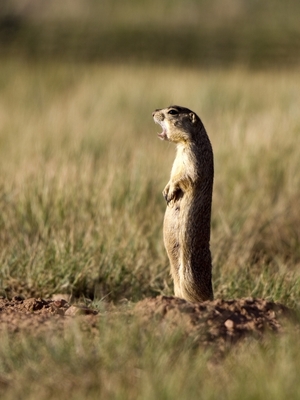
This story from NPR is about a study of prairie dog communication. The scientists discovered that they made different warning calls for different threats and were even capable of distinguishing different colors and shapes.
Tuesday, November 23, 2010
Cities and the Immune System

Denser populations have higher risks for epidemic diseases, but this new study featured on National Geographic argues that the payoff was the evolution of more resilient human populations.
Wednesday, October 27, 2010
Brahman, the Greeks, and the Scale of the Universe

One of the unifying ideas behind the Indian concept of Brahman and Greek rationalism is the inability of the human senses to perceive reality as it truly exists. For Indians this idea was a gateway into pondering the infinite nature of the universe and compare it to the miniscule role of the individual life in it to put suffering in perspective. For the Greeks it opened the door to metaphysics and their explorations of the world using the mind rather than the senses.
This link is to an interactive website that shows the relative sizes of things from the infinitesimally small to the infinitesimally large. On this scale humans are little past the midpoint towards the large, which is surprising considering the size of the observable universe beyond our solar system. Apparently there is an entire universe below what we are capable of seeing.
Thursday, September 16, 2010
This brief piece from NPR is about an extinct civilization in present-day Phoenix AZ. It was a farming civilization that died out because of overpopulation combined with climate change. The remnants have been largely covered up by the modern city, much like past civilizations are so often built on top of one another. It raises some interesting questions about preservation, why humans prefer certain locations for settlement, and the more existential question of how many societies have come and gone without our having ever known about them.
Wednesday, August 18, 2010
Orientalism in Modern Cinema

Orientalism is a term scholars use to describe the romanticization of the Near and Far East, usually by projecting the desires generated by our disillusionment with the modern Western world onto an exotic, foreign tableau. In this sense, the Orient is viewed as the antithesis of the West, either as a purer, more spiritual, timeless place waiting for Westerners to come and discover themselves, or as a confusing, untamed, and irrational place where Western norms break down. Much like the dichotomy of the Noble Savage/Cannibal in the Western imagination of the New World, both rely on stereotypes and placing the foreign into Western mental categories.
Orientalism arguably goes back to the ancient Greeks, who emphasized the foreignness of their Persian adversaries. Modern orientalism is a product of the Age of Exploration, the Enlightenment, and went hand-in-hand with imperialism. It continues to inform many of our views of the East. It is important to understand it as a cultural process because it so often limits our ability to understand Asia on its own terms. While these misunderstandings aren't always harmful, it is important to realize that they are there, and that just as we approach the foreign with our own mental toolbox, the foreign also approaches us with theirs'.
This article from NPR describes orientalism using examples from modern cinema, including the new film Eat, Pray, Love.
Tuesday, August 10, 2010
Symbolic Thinking and Human Evolution

Just like the line between human and animal can be very blurry, so too can the line between pre-human and human. This article from NPR argues that an important element in defining humans is the capacity for symbolic thought, which forms the basis for language and culture.
Greco-Roman Technology

This NPR story is about a new book by scholar Vicki Leon on technological innovation in the ancient world. Some of the stories - like the taboos about fava beans - are rather bizarre, but there are other examples of how some of the benefits of ancient memories are being confirmed today.
Wednesday, August 4, 2010
Human Diet and Evolution

Recent studies suggest that diet was a key component of the mental development of humans. The transition from raw wild foods to a diet that was high in energy and took less energy for the body to process (i.e. meat) allowed more energy to be spent on brain development. Cooking was equally important since it made foods easier to digest. Click here for the full story from NPR.
Turkey and Cuisine

One of the lesser known contributions of the Turks to world civilization is their cuisine, which many consider to be as important as French and Chinese. Turkish cuisine is a product of their lengthy presence at the crossroads of the spice trade, an affluent and enduring society, and cultural influences from the Mediterranean, India, and the Middle East. Turkish cuisine in turn has had an enormous influence over West Asian/Eastern European cooking.
Monday, July 26, 2010
Interactive Timeline of Human Evolution

This interactive site from the Smithsonian Institution shows the major stages of human evolution alongside the fluctuating climate. You will see how some of the various pre-human species overlapped and some of the gaps in the fossil record.
Subscribe to:
Posts (Atom)

